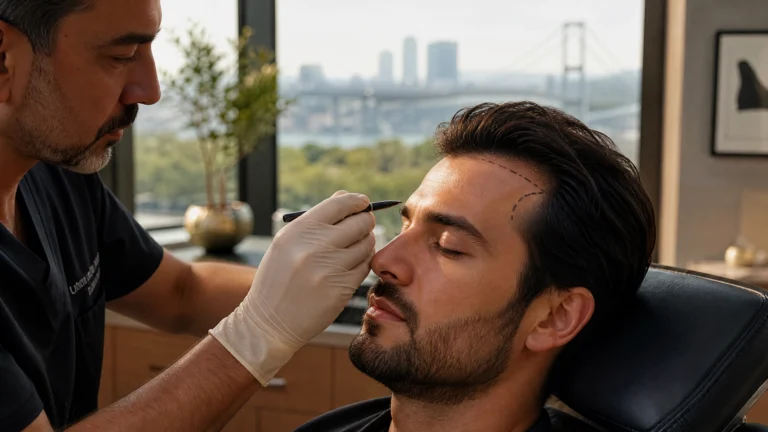
Hair Transplant
Afro Hair Transplant in Turkey: Curly Hair Considerations
Reviewed by admin · Last updated June 22, 2026
Hair restoration is not one-size-fits-all, and few areas illustrate this better than the afro hair transplant. Afro and tightly curled hair has a distinct structure that makes the procedure more technically demanding, and results depend heavily on whether the surgical team has genuine experience with this hair type. The good news is that, in skilled hands, curly and afro hair can produce beautifully full and natural results. Understanding the unique considerations helps patients of African descent choose a clinic that can truly deliver.
Why afro hair behaves differently
The defining feature of afro hair is that the follicle curves beneath the skin rather than running straight down. This curl is what gives the hair its texture, but it also makes extraction far more delicate, because the part of the follicle hidden under the surface does not follow a predictable straight path. A surgeon must anticipate this curve to remove each follicle intact, since damaging the graft during extraction reduces how well it survives and grows. This is the central technical challenge of afro hair restoration, and it is why general experience is not the same as specific experience with this hair type.
The advantage of natural coverage
While the curve adds difficulty, the curl also brings a real advantage. Curly and afro hair provides excellent natural coverage, because each curled hair occupies more visual space and casts the appearance of greater density. This means that, when the procedure is done well, afro hair can achieve a full, voluminous look that may require fewer grafts than the same coverage in straight hair. The texture works in the patient’s favour aesthetically, provided the grafts are extracted intact and placed with attention to the natural growth pattern.
Scarring and careful screening
An important consideration for some patients of African descent is a higher tendency toward certain types of scarring, including keloid scars. A responsible clinic screens for this history before surgery and plans the approach accordingly, sometimes with specific pre- and post-operative care. This is not a reason to avoid treatment, but it is a reason to insist on a thorough assessment and an honest conversation about your individual skin and healing tendencies. A clinic that takes this seriously is demonstrating exactly the care you want. Our guide on risks and side effects covers healing considerations more broadly.
Why clinic experience is decisive
More than almost any other case, an afro hair transplant lives or dies by the team’s specific experience. A clinic that performs excellent work on straight hair may struggle with the curved follicles of afro hair if it lacks dedicated experience. This is why it is reasonable, and important, to ask directly how often the team treats afro and curly hair, and to request before-and-after examples in hair genuinely similar to yours. Consistent, natural results across comparable cases are the clearest sign of real expertise. Our guide on how to choose a clinic sets out the wider checklist.
Planning and realistic expectations
As with any restoration, planning matters. A good surgeon assesses your donor area, your hair-loss pattern and your goals, and designs a hairline and density that will look natural as you age. Realistic expectations are part of this: the aim is a result that suits your face and grows in well over the following year. The transplanted hairs shed before regrowing, density builds gradually, and the final outcome becomes clear at around twelve months, exactly as with other hair types. Patience and a well-matched, experienced clinic are the foundations of a result you will be happy with.
How Rexalife Helps
Rexalife is a medical tourism consultancy that connects international patients with verified clinics and surgeons in Turkey. We do not perform procedures or give medical advice. Our role is to help you find reputable clinics with genuine, demonstrable experience in afro and curly hair, understand what a realistic plan looks like, and coordinate consultations and travel logistics. The assessment of your suitability, including any screening for scarring tendencies, and all clinical decisions rest with your surgeon. Patients researching their options may also find our guide on hair transplant success rates useful for setting expectations.
Questions to ask a clinic about afro hair
When you contact a clinic, a few targeted questions quickly reveal whether it has genuine experience with afro and curly hair. Ask how frequently the team treats this hair type specifically, and request before-and-after examples in hair that genuinely resembles yours rather than generic cases. Ask how they handle the curved follicle during extraction to keep grafts intact, since this is the central technical challenge. If you have any history of keloid or raised scarring, ask directly how they screen for and manage it. Finally, ask who performs the extraction and placement, and confirm a qualified, experienced practitioner is doing this delicate work. The clarity and confidence of the answers tell you a great deal. A clinic that treats afro hair regularly will answer specifically and show relevant results, while vague reassurances or a lack of comparable examples are reasons to keep looking until you find a team with proven expertise in hair like yours.
Conclusion
An afro hair transplant can produce stunning, natural results, but only when performed by a team with specific experience in the curved follicles and unique demands of afro and curly hair. The texture offers wonderful natural coverage, while careful screening and expert extraction protect against the particular challenges involved. Choose a clinic with proven experience in hair like yours, ask to see comparable results, and approach the process with realistic, well-informed expectations.
Frequently Asked Questions
Is an afro hair transplant more difficult?
Yes, it requires specific expertise. Afro hair follicles curve beneath the skin, which makes extraction without damaging the graft more challenging. A surgeon experienced specifically with afro and curly hair is important for good results, so clinic selection matters even more.
Can curly hair give good transplant results?
Curly and afro hair can produce excellent, full-looking results because the curl provides natural coverage and the appearance of density. The key is choosing a team experienced with the unique extraction and placement demands of this hair type.
Is there a higher risk of scarring with afro hair?
Some patients of African descent have a higher tendency toward certain types of scarring, such as keloids. A careful clinic screens for this beforehand and plans accordingly, which is why a thorough pre-operative assessment is essential.
How do I find a clinic experienced in afro hair?
Ask directly about the team’s experience with afro and curly hair, and request to see before-and-after examples in hair similar to yours. Genuine experience shows in consistent, natural results across comparable cases.
About the author
admin — RexaLife medical content team. All health content is reviewed by qualified professionals.
Have questions about this topic?
Speak with a dedicated coordinator. No obligation — your information stays private.
RexaLife is a medical tourism facilitator and healthcare concierge service. RexaLife is not a hospital, clinic, or medical provider and does not provide medical care, diagnosis, or advice. All treatments are delivered by independent, accredited partner providers. Information on this page is general and does not replace professional medical consultation. Costs are estimates and depend on the chosen provider.