Medical Imaging
Multiparametric Prostate MRI: What Men Should Know
Reviewed by admin · Last updated June 21, 2026
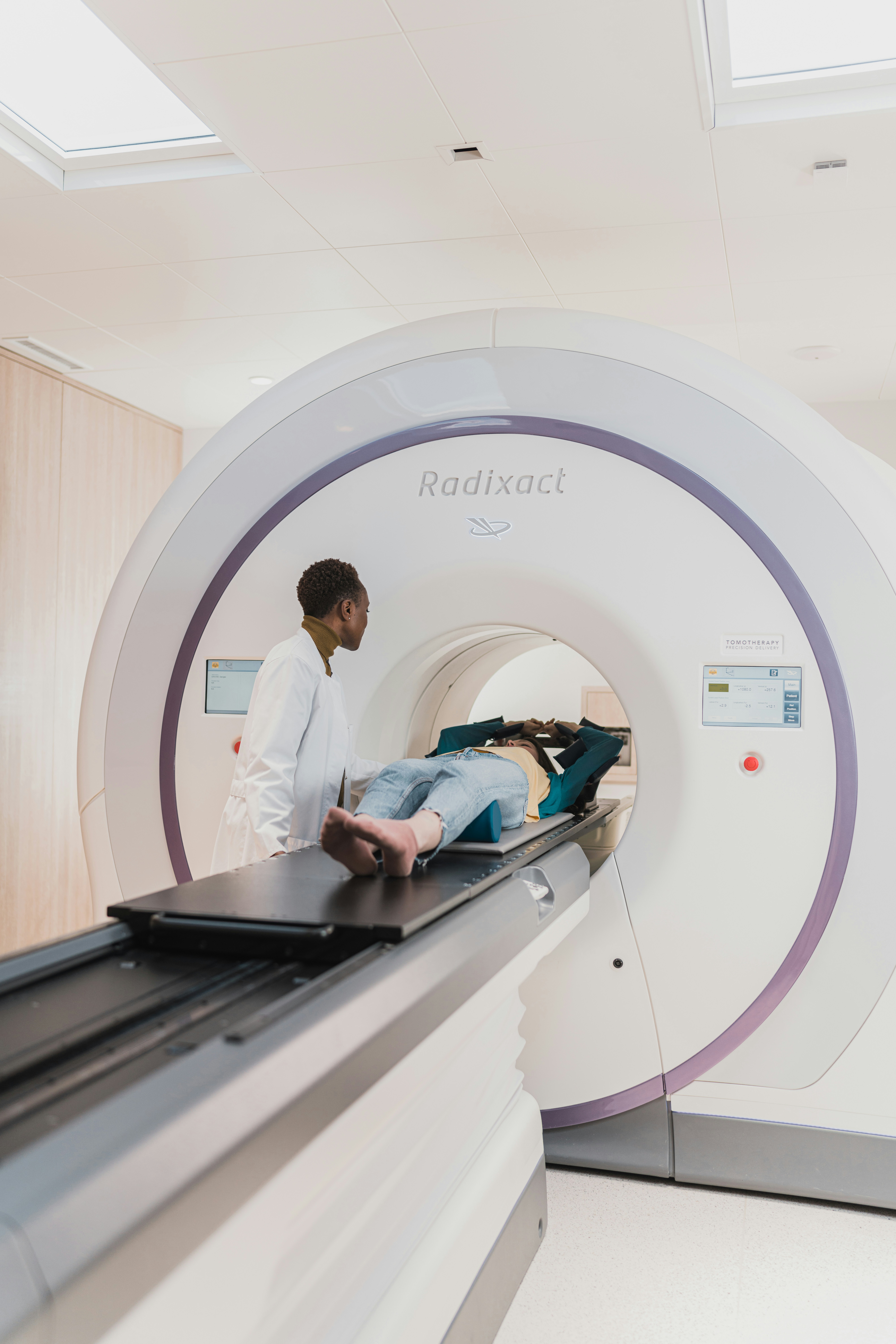
For men facing questions about prostate health, imaging has changed the path considerably. A multiparametric prostate MRI brings together several different MRI techniques in one examination, each highlighting a different property of the prostate tissue. By combining these views, radiologists can identify and characterise suspicious areas with far greater confidence than older single-sequence scans allowed. This has reshaped how prostate cancer is assessed, often guiding decisions about whether a biopsy is needed and exactly where to target it.
What the multiple parameters are
The term multiparametric simply means that the scan uses more than one type of imaging. Typically this includes standard anatomical images that show the shape and structure of the prostate, diffusion imaging that reflects how water molecules move within the tissue, and dynamic contrast imaging that shows how the tissue takes up a contrast agent over time. Each sequence reveals something different, and cancer tends to behave in characteristic ways across them. By reading these views together, the radiologist builds a more complete and reliable assessment than any single image could provide.
Why it is done before biopsy
Traditionally, a prostate biopsy involved taking samples somewhat blindly from different regions of the gland, which risked missing significant cancer or finding only low-grade disease that might never have caused harm. A multiparametric MRI changes this by mapping suspicious areas in advance. If the scan highlights a concerning region, the biopsy can be aimed precisely at it, improving the chance of finding clinically important disease. If the scan is reassuring, it may, in some cases and with your doctor’s judgement, support a more conservative approach. This targeting is one of the main reasons the technique has become so valuable.
Understanding the PI-RADS score
Radiologists summarise their findings using a standardised system called PI-RADS, usually scored from 1 to 5. A low score suggests that significant cancer is unlikely, while a higher score indicates a greater probability that a targeted biopsy is warranted. This standardisation helps different radiologists communicate clearly and helps your doctor weigh the imaging alongside other information. It is important to understand that a PI-RADS score is not a diagnosis on its own; it is a structured estimate of likelihood that feeds into a broader clinical picture, including your PSA level and examination. Ultra-high-field systems can add detail to these studies, as discussed in our guide on choosing between 5 Tesla and 3 Tesla MRI.
How it fits with PSA and biopsy
Prostate assessment is rarely about a single test. A PSA blood test can raise a question, an MRI helps localise and characterise any concern, and a biopsy provides tissue for definitive analysis. These tools work together rather than in competition. MRI does not replace the PSA test or the physician’s examination; it adds a layer of detail that makes the overall assessment more precise. Your doctor combines all of these inputs, along with your age, family history and preferences, to recommend a path that fits your situation. For background on screening, see our guide on prostate cancer screening for men over 40.
Limitations and honest expectations
No imaging test is perfect. A multiparametric prostate MRI can occasionally miss small or unusual cancers, and it can sometimes flag areas that turn out to be harmless, leading to additional tests. Image quality and interpretation depend heavily on a high-quality scanner and an experienced radiologist, which is why where the scan is done matters. The technique is a major advance, but it is a tool to support careful clinical judgement, not a crystal ball. Understanding both its strengths and its limits helps men engage in their care with realistic expectations and good questions for their doctor.
How Rexalife Helps
Rexalife is a medical tourism consultancy that connects international patients with verified imaging centres and specialists in Turkey. We do not perform scans, assign PI-RADS scores or give medical advice. If your doctor has recommended prostate imaging, we can help you find centres with the appropriate technology and experienced radiologists, explain the preparation, and coordinate appointments and reports for your visit. Decisions about your assessment and treatment always remain with your own doctor and specialist. Men arranging a broader assessment may also find our guide on health screenings every man should consider after 40 useful.
Preparing for the scan and the conversation
A little preparation helps you get the most from both the scan and the discussion that follows it. Before the appointment, the centre may give specific instructions, sometimes relating to bowel preparation or timing, so follow their guidance closely as it can affect image quality. It is also worth gathering your relevant history beforehand, including previous PSA results, any family history of prostate or related cancers, and details of medications, since this context shapes how the findings are weighed. When you receive the results, remember that a PI-RADS score describes likelihood rather than certainty, so it is reasonable to ask your doctor what the score means for your next step, whether that is targeted biopsy, monitoring or simple reassurance. Asking how confident the radiologist was, and whether the scan quality was good, are fair questions too. Approaching the process as an informed participant, rather than a passive recipient of a number, helps you and your doctor make a decision that genuinely fits your situation and your own preferences about how to proceed.
Before any scan, it is worth understanding MRI safety and what to disclose, and for advanced neurological studies our guide on MRI spectroscopy and tractography explains what is possible.
Conclusion
Multiparametric prostate MRI has become a cornerstone of modern prostate assessment, combining several imaging techniques to identify and target suspicious areas with new precision. Understood through the PI-RADS score and used alongside PSA testing and biopsy, it helps doctors make better-informed decisions and can spare some men unnecessary procedures. Like all imaging, it works best in skilled hands and as part of a complete clinical picture guided by your doctor.
Frequently Asked Questions
What is a multiparametric prostate MRI?
It is a detailed MRI of the prostate that combines several types of imaging sequences, each showing a different tissue property. Together they help radiologists spot and characterise suspicious areas more reliably than a single sequence could, which supports decisions about whether a biopsy is needed.
Why is prostate MRI done before a biopsy?
An MRI can identify and target suspicious areas, helping doctors decide whether a biopsy is needed and, if so, where to sample. This targeted approach can improve accuracy and may help some men avoid an unnecessary biopsy, though the decision rests with your doctor.
What does a PI-RADS score mean?
PI-RADS is a standardised scale, usually from 1 to 5, that radiologists use to describe how likely a finding is to be significant. A higher score suggests a greater likelihood that a targeted biopsy is warranted, but it is one input into your doctor’s overall assessment, not a diagnosis by itself.
Does prostate MRI replace the PSA test?
No. PSA blood testing, MRI and biopsy each provide different information. MRI complements PSA results and clinical examination rather than replacing them, and your doctor combines all of these when planning your care.
About the author
admin — RexaLife medical content team. All health content is reviewed by qualified professionals.
Have questions about this topic?
Speak with a dedicated coordinator. No obligation — your information stays private.
RexaLife is a medical tourism facilitator and healthcare concierge service. RexaLife is not a hospital, clinic, or medical provider and does not provide medical care, diagnosis, or advice. All treatments are delivered by independent, accredited partner providers. Information on this page is general and does not replace professional medical consultation. Costs are estimates and depend on the chosen provider.