Hair Transplant
Repair Hair Transplant: Fixing Bad Results in Turkey
Reviewed by admin · Last updated July 15, 2026
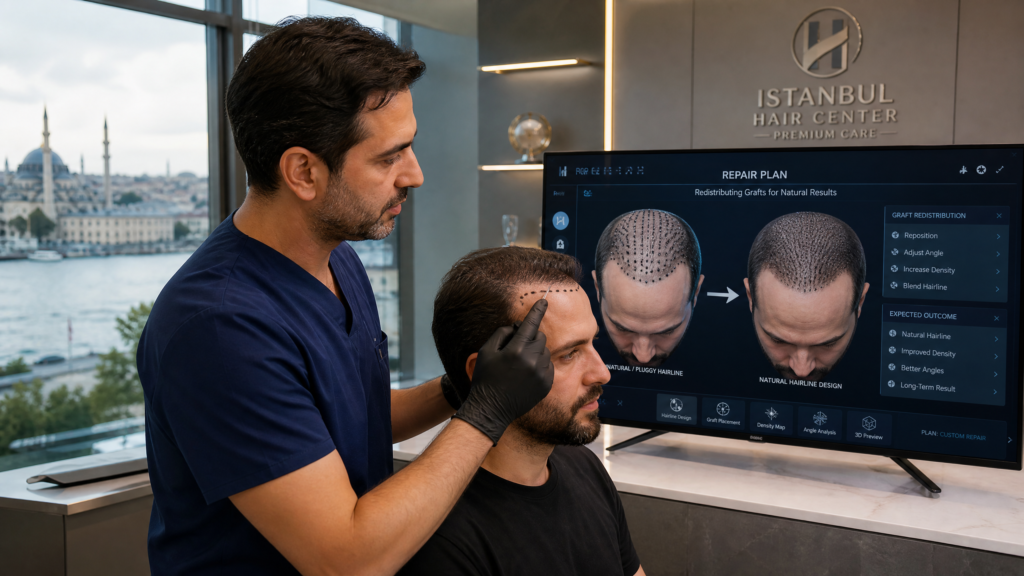
Not every hair transplant goes to plan, and the rise of high-volume, low-cost surgery has been matched by a growing demand for correction. A repair hair transplant aims to fix the problems left by a poorly executed first procedure, from unnatural hairlines to depleted donor areas, and while a great deal can often be improved, repair work comes with its own realities that every affected patient should understand.
What goes wrong
Unsatisfactory results usually trace back to a handful of causes. An unnatural or overly low hairline that does not suit the face, grafts placed at the wrong angle so hair grows in odd directions, a “pluggy” look from outdated or careless placement, poor density, and an overharvested donor area are among the most common. Many of these stem from clinics prioritising volume over care, which is why spotting a hair mill matters so much when choosing where to go in the first place.
What repair surgery can do
Skilled repair work can achieve a great deal. A surgeon can redesign an unnatural hairline into a softer, age-appropriate shape, redistribute or camouflage badly angled grafts, add density to thin areas and improve the overall naturalness of the result. In many cases the improvement is dramatic, turning an obvious transplant into something that finally looks like it belongs. This corrective artistry is among the most demanding work in the field, rewarding genuine surgeon-led expertise.
The donor area is the constraint
The honest limit on repair is the donor supply. A first transplant has already drawn on the finite lifetime graft budget, and if the donor area was overharvested, there may be little left to work with. Repair is therefore about realistic improvement within remaining resources, not a guaranteed return to perfection. Where donor hair is severely depleted, techniques such as scalp micropigmentation or, in selected cases, body hair may supplement what surgery can offer.
Correcting an overharvested donor
One of the most distressing outcomes is a visibly thinned or scarred donor area from aggressive harvesting. Repairing this is its own challenge, sometimes involving careful redistribution, scar camouflage or pigmentation. Our guide to whether an overharvested donor can be fixed looks at this specific problem in detail, but the broader lesson is that prevention through a careful first procedure is always better than correction.
Why repair is harder than a first transplant
Repair work is generally more complex than a primary procedure. The surgeon must plan around existing scarring, a possibly limited donor area and the constraints of the previous design, all while delivering a natural improvement. This makes experience and meticulous planning even more critical than usual, and it is not work for a high-volume, low-cost operation. A thorough consultation that honestly assesses what is achievable is the essential first step.
How Rexalife helps
Rexalife is a medical tourism consultancy connecting patients with verified clinics and surgeons in Turkey; we do not perform surgery or provide medical advice. For repair cases, we place particular emphasis on reaching experienced, surgeon-led clinics that assess honestly what correction can and cannot achieve. The clinical judgement about your specific repair always rests with the treating surgeon.
The emotional toll and the path forward
It is worth acknowledging that a bad hair transplant carries an emotional weight beyond the cosmetic problem itself. Patients often feel a mix of frustration, regret and anxiety, having invested money and hope only to end up worse off, sometimes with a result that is harder to hide than their original hair loss. This emotional reality deserves compassion, and a good repair surgeon understands it. The path forward begins with an honest, unhurried assessment of what can realistically be improved, followed by a clear plan that does not overpromise a second time. Many patients find genuine relief in simply being told the truth about their situation after a first experience that may have been all marketing and no substance. While not every problem can be fully erased, meaningful improvement is achievable in a great many cases, and the psychological lift of finally having a natural-looking result can be considerable. The lesson for anyone still choosing a first clinic is clear: the care and research you invest upfront, including learning to recognise the warning signs of low-quality operations, is the surest way to avoid ever needing this difficult, emotionally taxing journey at all.
For anyone living with a disappointing result, the most important step is an honest assessment from an experienced repair surgeon who will explain clearly what correction can realistically achieve within the remaining donor supply.
Conclusion
A repair hair transplant can transform a disappointing result into a natural one, redesigning hairlines, correcting angles and adding density, but always within the limits of the remaining donor supply. The harder, more delicate nature of repair makes surgeon experience paramount, and where donor hair is depleted, realistic expectations and complementary techniques matter. Best of all is avoiding the need entirely by choosing a careful, surgeon-led clinic the first time.
Frequently Asked Questions
What is a repair hair transplant?
It is a corrective procedure that addresses problems from a previous transplant, such as an unnatural hairline, visible or pluggy grafts, poor density or wasted donor hair. The goal is to make a flawed result look natural, working within whatever donor supply remains.
Can every bad transplant be fixed?
Many can be significantly improved, but how much depends on the remaining donor supply and the nature of the original problem. A depleted donor area limits what is possible, so repair is about realistic improvement rather than guaranteed perfection.
Why do some transplants go wrong?
Common causes include an unnatural or overly low hairline, grafts placed at poor angles, overharvested donor areas and high-volume clinics prioritising speed over care. Choosing an experienced, surgeon-led clinic the first time greatly reduces the risk.
Is repair work more difficult than a first transplant?
Usually yes, because it must work around existing scarring, a possibly depleted donor area and the previous design. This makes surgeon experience and careful planning even more important for repair cases.
About the author
admin — RexaLife medical content team. All health content is reviewed by qualified professionals.
Have questions about this topic?
Speak with a dedicated coordinator. No obligation — your information stays private.
RexaLife is a medical tourism facilitator and healthcare concierge service. RexaLife is not a hospital, clinic, or medical provider and does not provide medical care, diagnosis, or advice. All treatments are delivered by independent, accredited partner providers. Information on this page is general and does not replace professional medical consultation. Costs are estimates and depend on the chosen provider.