Hair Transplant
AI Hair Mapping and Simulation Before a Transplant
Reviewed by admin · Last updated June 22, 2026
As technology works its way into hair restoration, patients increasingly encounter AI hair mapping and digital simulation as part of the planning process. These tools analyse the scalp, help plan how grafts might be distributed, and sometimes generate a preview of the possible result. They can genuinely improve planning and help align expectations, but they are easily oversold. Understanding what AI mapping and simulation can and cannot do helps patients appreciate their value without mistaking a digital preview for a guaranteed outcome.
What AI hair mapping does
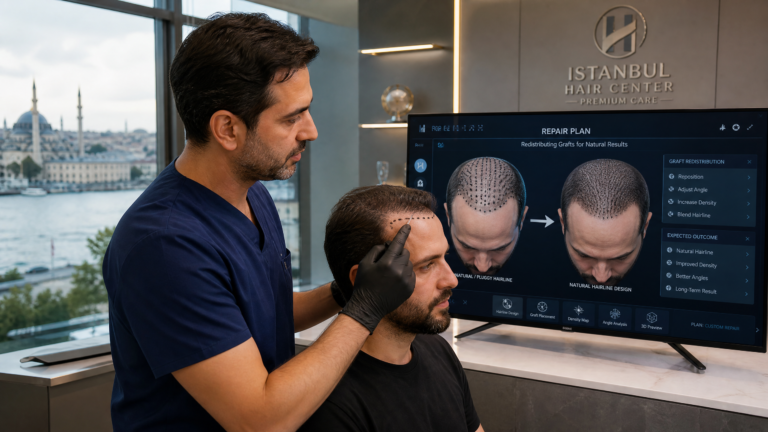
AI hair mapping uses digital imaging and analysis to assess your scalp and hair in detail. It can help evaluate donor density, examine the pattern and extent of hair loss, and model how grafts might be distributed across the area to be treated. By bringing data and consistency to this analysis, it supports the surgeon in planning density and placement. Some systems go further, creating a visual simulation that previews how the final result might look. The aim is to make planning more precise and to give patients a clearer sense of what to expect before any procedure takes place.
The value of simulation for expectations
One of the most useful aspects of these tools is their role in setting expectations. A digital simulation can help a patient picture a realistic outcome before committing, which supports an honest conversation about what is achievable. When used well, this aligns the patient’s hopes with what the surgeon can actually deliver, reducing the risk of disappointment. It also makes the planning collaborative, letting the patient understand and discuss the proposed design. Our guide on realistic density reflects the same goal of grounded, well-informed expectations that simulation can support.
What the tools cannot do
It is important to be clear about the limits. A simulation is a model, not a promise; it illustrates a possible result, but the real outcome depends on biology, the skill of the technique, how grafts survive, and individual healing. No software can guarantee that your result will match a preview exactly. There is also a risk that an impressive simulation is used as a marketing tool to create unrealistic expectations or pressure a decision. Treating the simulation as a helpful guide rather than a contractual preview keeps it in proper perspective. The honest framing is that it informs expectations, it does not set them in stone.
Technology supports, it does not replace
Perhaps the most important point is that AI tools support the surgeon; they do not replace the surgeon. The analysis and simulation are inputs into the planning, but the clinical judgement, the design of the hairline, the distribution of density, and the execution of the procedure remain firmly in human hands. An experienced surgeon interprets the data, applies their artistry and judgement, and adapts to what they find during surgery. Excellent results were achieved long before these tools existed, which is a useful reminder that technology is an aid to skill, not a substitute for it. Our guide on surgeon-led procedures underlines where the real expertise lies.
How to view these tools sensibly
The sensible attitude is to welcome AI mapping and simulation as helpful additions to planning while keeping them in perspective. They can improve precision and aid expectation-setting, which is genuinely valuable, but they are not essential to a good result and should never be the main reason to choose a clinic. Far more important are the surgeon’s experience, the clinic’s safety and licensing, realistic before-and-after results, and good aftercare. If a clinic offers these tools as part of a thoughtful, honest planning process, that is a positive. If it leans on a flashy simulation to oversell, that is a reason for caution, as our guide on choosing a clinic explains.
How Rexalife Helps
Rexalife is a medical tourism consultancy that connects international patients with verified clinics and surgeons in Turkey. We do not perform procedures or give medical advice. Our role is to help you find reputable clinics, understand how planning tools are used, and coordinate consultations and logistics. We encourage you to value surgeon skill and safety above any single technology and to treat simulations as guides rather than guarantees. All clinical decisions rest with your surgeon. Patients researching planning may also find our guide on hairline design useful.
Using simulations to have better conversations
Where AI simulations add the most value is in improving the conversation between you and your surgeon. A visual model gives you both something concrete to discuss, making it easier to talk through the proposed hairline, the distribution of density, and what is realistically achievable given your donor supply. Used this way, a simulation becomes a tool for shared understanding rather than a sales prop. You can ask the surgeon how confident they are that the real result will resemble the preview, what factors might cause it to differ, and how they have accounted for your individual hair characteristics. A surgeon who uses the simulation to set honest expectations, including its limits, is using the technology well. The goal is to leave the consultation with a clear, realistic picture in your mind, supported but not dictated by the software. When technology and an experienced surgeon work together in this way, the result is better-informed patients and expectations that match what surgery can genuinely deliver.
Conclusion
AI hair mapping and simulation can improve the planning of a hair transplant and help set realistic expectations, offering a useful preview and data-driven analysis. But a simulation is a guide, not a guarantee, and these tools support rather than replace the surgeon’s skill and judgement. Welcome them as helpful additions, keep them in perspective, and base your clinic choice on experience, safety and realistic results above any technology.
Frequently Asked Questions
What is AI hair mapping?
AI hair mapping uses digital analysis of your scalp and hair to help plan a transplant, assessing donor density and modelling how grafts might be distributed. Some systems also simulate a preview of the possible result to help align expectations before surgery.
Is an AI simulation an accurate preview of my result?
A simulation is a helpful planning and expectation-setting tool, not a guarantee. It illustrates a possible outcome, but the real result depends on biology, technique and healing, so treat it as a guide rather than a promise.
Does AI replace the surgeon?
No. AI mapping and simulation are tools that support the surgeon’s planning and your understanding. The clinical judgement, design and execution remain firmly with the experienced surgeon, who interprets and applies the analysis.
Is AI mapping necessary for a good result?
It is not essential; excellent results were achieved before these tools existed. It can add value to planning and expectation-setting, but the surgeon’s skill and judgement matter far more than any single technology.
About the author
admin — RexaLife medical content team. All health content is reviewed by qualified professionals.
Have questions about this topic?
Speak with a dedicated coordinator. No obligation — your information stays private.
RexaLife is a medical tourism facilitator and healthcare concierge service. RexaLife is not a hospital, clinic, or medical provider and does not provide medical care, diagnosis, or advice. All treatments are delivered by independent, accredited partner providers. Information on this page is general and does not replace professional medical consultation. Costs are estimates and depend on the chosen provider.