
Dental Treatments
Digital Smile Design: How Turkish Clinics Plan Your New Smile Before You Arrive
Reviewed by admin · Last updated July 14, 2026
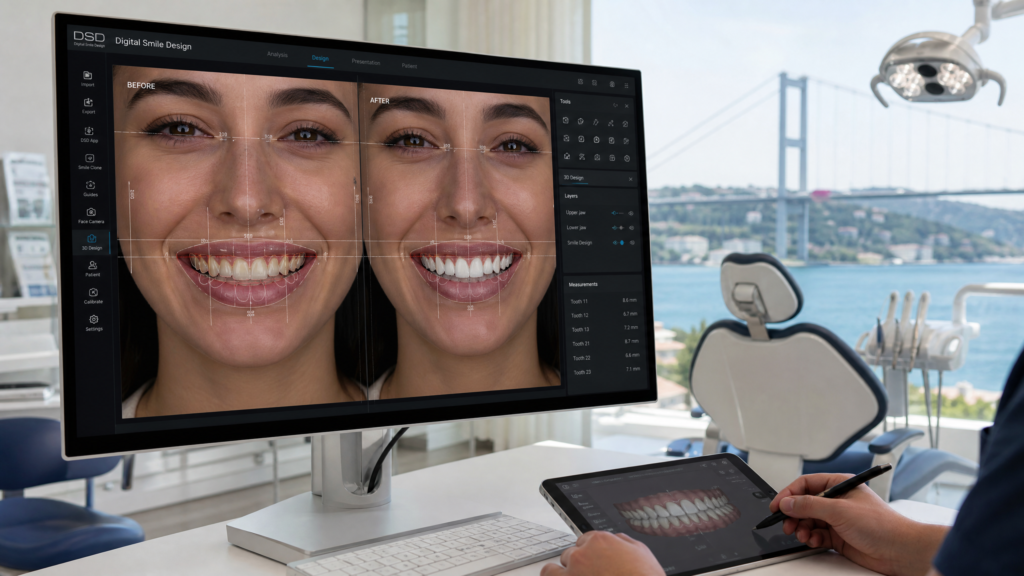
One of the more reassuring developments in cosmetic dentistry is the ability to see, in detailed digital form, roughly how your new smile will look before a single tooth is touched. Digital Smile Design, often abbreviated DSD, is now used widely across leading dental clinics in Turkey as a planning tool for veneers, crowns, implants, and full smile makeovers. This guide explains how the technology works, what the process looks like for patients, and why it has become such a valuable part of treatment planning.
Rexalife is a medical consultancy, not a dental clinic. We help match patients with dental teams in Turkey that use Digital Smile Design as part of their standard planning process, and help you understand what to expect from your consultation.
What Is Digital Smile Design?
Digital Smile Design is a structured, photo- and video-based planning process that combines detailed facial and dental photography with specialized software to map out exactly how a patient’s new smile will look, factoring in facial proportions, lip line, tooth shape, and symmetry — not just the teeth in isolation. Rather than relying purely on a dentist’s verbal description or a generic “before and after” gallery from other patients, DSD produces a personalized digital mock-up based on your own face and smile, which the dental team then uses as the blueprint for the actual treatment.
How the Process Works
The process typically begins with a series of detailed photographs and videos of your face, lips, and teeth taken from multiple angles, sometimes alongside a 3D scan of your mouth using an intraoral scanner rather than traditional impressions. This data is fed into specialized software that overlays proposed tooth shapes and positions onto your actual facial photographs, allowing the dental team — and you — to see a realistic preview of the proposed result before treatment starts. Many clinics also produce a physical mock-up, sometimes called a trial smile, made from a temporary material placed directly in your mouth so you can see and even feel an approximation of the new smile in person.
Why This Matters for International Patients
For patients travelling from abroad specifically for dental treatment, this preview step is particularly valuable because it addresses one of the biggest sources of anxiety in dental tourism: the fear of an unexpected or disappointing result after a long trip and significant financial commitment. Reviewing and approving a digital design before treatment begins — sometimes even before you travel, since many clinics can start this process remotely using photographs you send in advance — gives you meaningful input into the final look rather than discovering the result only once treatment is complete. This pairs well with the broader planning process described in our guide to getting a dental treatment plan before you fly.
What DSD Can and Cannot Predict
It’s worth understanding the limits of this technology. Digital Smile Design is extremely useful for visualizing tooth shape, proportion, and overall smile aesthetics, and for planning exactly how many teeth need treatment and with what approach — whether veneers, crowns, or a combination. It is less able to perfectly predict the exact final shade of a material once it’s placed and reacts to your mouth’s specific lighting conditions, and it cannot account for biological healing variables in procedures involving gum reshaping or implants, where the final result also depends on how your tissue heals. A skilled dental team will explain these limitations clearly rather than presenting the digital mock-up as a guaranteed, pixel-perfect outcome.
Which Treatments Commonly Use DSD?
Digital Smile Design is used across a wide range of cosmetic and restorative dental treatments in Turkey, including veneers and crowns for a full smile makeover, planning for All-on-4 dental implants where the final tooth arrangement needs careful planning relative to facial proportions, and gummy smile correction where gum line adjustment is part of the overall design. Our broader guide to a smile makeover in Turkey covers how these different elements typically come together within a single comprehensive treatment plan.
Starting the Process Remotely
Many clinics in Turkey are set up to begin the Digital Smile Design process before you even travel, using photographs and videos you submit through a secure online consultation, sometimes supplemented by a 3D scan if you have recent dental records available. This allows you to review and discuss an initial design concept, ask questions, and request adjustments before committing to flights and accommodation — meaning much of the planning conversation can happen while you’re still comparing clinics and deciding where to go.
Questions to Ask About Your DSD Consultation
Before committing to a clinic, it’s reasonable to ask whether Digital Smile Design is included as standard in your treatment package or offered as an additional cost, whether you’ll receive a physical trial smile mock-up to see and feel in person during your visit, and how many rounds of revision to the digital design are included if you want adjustments before final treatment begins. These questions help you compare quotes on a like-for-like basis, since not every clinic includes the same level of digital planning by default.
What to Bring to Make Remote Planning Accurate
If you’re starting the Digital Smile Design process remotely before travelling, the quality of your submitted photographs directly affects how accurate the initial design proposal will be. Clinics typically request close-up photos of your smile from straight on and at an angle, a natural relaxed smile alongside a full, wide smile, and sometimes a short video of you speaking naturally, all taken in good, even lighting without a flash that could distort tooth shade. Following the clinic’s specific photo guidelines carefully, rather than sending casual snapshots, makes a genuine difference in how useful the initial remote design consultation turns out to be.
Revisions and Final Approval Before Treatment
A well-run Digital Smile Design process includes a clear opportunity for you to request adjustments to the initial proposal — perhaps preferring a slightly different tooth shape, a less dramatic change, or a different smile line — before the design is finalized and used as the basis for actual treatment. Confirming how many rounds of revision are included, and that you’ll have a genuine chance to approve the final design before any irreversible dental work begins, protects you from an unwelcome surprise after treatment is already complete.
Managing Expectations About Natural Variation
Even with highly accurate Digital Smile Design planning, some natural variation between the digital preview and final result is normal, since living tissue, gum response, and material behavior in the mouth cannot be predicted with complete, pixel-perfect precision from a photograph alone. A good dental team communicates this honestly, presenting the digital design as a highly reliable guide and shared decision-making tool rather than an exact, guaranteed final photograph.
Photo Checklist for Remote Planning
- Straight-on and angled close-up smile photos
- A relaxed natural smile and a full wide smile
- A short video of you speaking naturally
- Good, even lighting without flash
How Rexalife Helps
We help match patients with dental clinics in Turkey that use genuine Digital Smile Design planning, not just marketing renderings, and help coordinate the remote photograph and scan submission process so your design consultation can begin before you travel. We do not design smiles or perform dental treatment ourselves — our role is connecting you with the right dental team and helping you compare packages transparently.
Frequently Asked Questions
What is Digital Smile Design?
Digital Smile Design is a photo- and software-based planning process that creates a personalized digital preview of your new smile based on your own facial features, used to plan treatments like veneers, crowns, and implants before work begins.
Can I see my new smile before I travel to Turkey?
Many clinics can begin the Digital Smile Design process remotely using photographs and videos you submit in advance, allowing you to review an initial design concept before committing to travel.
Is a physical trial smile the same as the digital design?
A physical trial smile, made from temporary material placed in your mouth, is a related but separate step that lets you see and feel an approximation of the design in person, complementing the digital preview.
Can Digital Smile Design predict the exact final shade of my teeth?
Not perfectly. It’s very effective for planning tooth shape and proportion, but the exact final shade and appearance can vary once the material is placed and reacts to your mouth’s lighting conditions.
Is Digital Smile Design included in every dental package in Turkey?
Not always. It’s worth asking directly whether it’s included as standard or offered as an additional cost, and how many rounds of design revision are included before you compare quotes from different clinics.
Is Digital Smile Design more expensive than traditional smile planning?
It varies by clinic; some include it as standard within their smile makeover packages, while others charge an additional planning fee, so it’s worth clarifying this when comparing quotes.
Can Digital Smile Design be used for a single tooth treatment?
It’s most commonly used for multi-tooth smile makeovers where overall proportion and symmetry matter most, though some clinics apply simplified versions of the technology even for smaller single-tooth cases.
About the author
admin — RexaLife medical content team. All health content is reviewed by qualified professionals.
Have questions about this topic?
Speak with a dedicated coordinator. No obligation — your information stays private.
RexaLife is a medical tourism facilitator and healthcare concierge service. RexaLife is not a hospital, clinic, or medical provider and does not provide medical care, diagnosis, or advice. All treatments are delivered by independent, accredited partner providers. Information on this page is general and does not replace professional medical consultation. Costs are estimates and depend on the chosen provider.