Bariatric Surgery
Mini Gastric Bypass in Turkey: Procedure, Cost and Recovery
Reviewed by admin · Last updated July 12, 2026
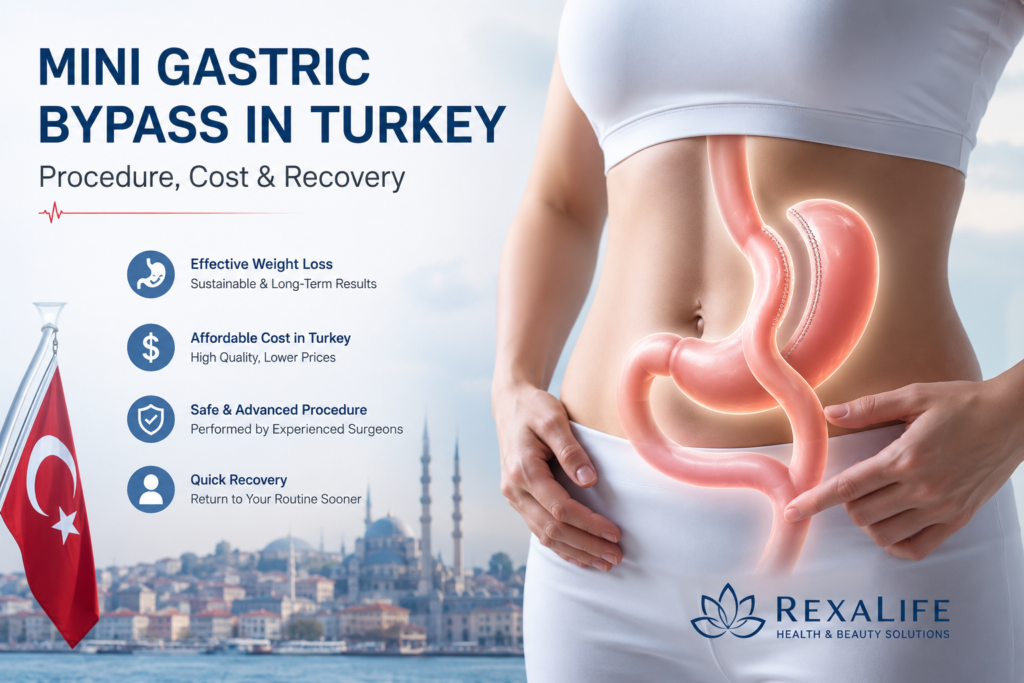
Mini gastric bypass (also called one-anastomosis gastric bypass, or OAGB) has become one of the most requested weight-loss procedures among international patients travelling to Turkey. It combines a shorter, technically simpler operation than a traditional Roux-en-Y gastric bypass with strong, durable weight-loss results — which is why more bariatric surgeons now offer it as a first-line option rather than a fallback procedure.
Rexalife is a medical consultancy, not a hospital or surgical team. We do not perform any procedure ourselves. Our role is to match you with an accredited hospital and an experienced bariatric surgeon, help you understand your options, and stay with you through recovery and follow-up. This guide explains what mini gastric bypass involves, who tends to benefit from it, and what to expect if you choose to travel to Turkey for the surgery.
What Is a Mini Gastric Bypass?
During a mini gastric bypass, the surgeon creates a long, narrow tube from the upper part of the stomach — similar in shape to a sleeve gastrectomy — and then connects this new stomach pouch directly to a loop of small intestine further down the digestive tract. This single connection (one anastomosis) is what gives the procedure its alternative name. Compared with a traditional gastric bypass, which requires two separate connections, this simplified version generally takes less time in the operating room and involves a somewhat lower rate of certain technical complications.
The effect on the body is twofold. First, the smaller stomach pouch restricts how much food can be eaten at one sitting. Second, by rerouting food past a portion of the small intestine, the procedure reduces the amount of calories and fat the body absorbs, while also triggering hormonal changes that reduce hunger and improve blood sugar control. This combination of restriction and malabsorption is why mini gastric bypass tends to produce more weight loss than a gastric sleeve alone for many patients, which is worth understanding alongside our comparison of gastric bypass vs gastric sleeve.
Who Is a Good Candidate?
Surgeons typically consider mini gastric bypass for patients with a body mass index above 35, or above 30 with an obesity-related condition such as type 2 diabetes, high blood pressure, or sleep apnea. It is also frequently recommended for patients who have significant acid reflux alongside obesity, since the procedure can reduce reflux symptoms for many people, unlike a sleeve gastrectomy which can sometimes worsen them. Patients who have already tried a gastric sleeve and regained weight, or who did not lose as much as expected, are also commonly evaluated for this operation as a revision option — a topic we cover in more depth in our guide to revisional bariatric surgery.
As with any bariatric procedure, candidacy is not only about the number on the scale. Surgeons look closely at overall health, prior abdominal surgeries, eating patterns, and willingness to commit to lifelong dietary changes. A thorough remote consultation and review of your medical history is the starting point Rexalife arranges before any travel plans are made.
How the Procedure Works, Step by Step
Mini gastric bypass is performed laparoscopically in nearly all cases in Turkey, meaning the surgeon works through several small incisions using a camera and specialized instruments rather than one large open cut. General anesthesia is used, and the operation itself typically takes 60 to 90 minutes. Most patients spend one night in intensive observation and a further one to two nights on a standard ward before discharge, assuming no complications arise.
In the days immediately following surgery, patients follow a strict liquid diet, which gradually progresses to pureed foods and then soft foods over several weeks. This staged approach protects the new stomach pouch and the surgical connection while it heals. Your bariatric team will give you a detailed, written nutrition plan before you fly home, and Rexalife can help arrange follow-up video consultations so your progress continues to be monitored from your home country.
Cost of Mini Gastric Bypass in Turkey
One of the main reasons international patients choose Turkey for this surgery is cost. Private hospital prices for mini gastric bypass in Turkey are commonly 60–70% lower than equivalent private treatment in the UK, US, or Western Europe, even after adding flights and accommodation. Packages generally include the surgical fee, anesthesia, hospital stay, pre-operative tests, and a period of aftercare support, though exactly what is bundled varies by clinic. We recommend reviewing our detailed Medical Tourism Turkey Cost Guide 2026 for a full breakdown of typical price ranges by procedure, and always ask for a written, itemized quote before committing to any clinic.
Weight Loss Expectations
Most patients who undergo mini gastric bypass lose between 70% and 80% of their excess body weight within the first 12 to 18 months, with the majority of that loss occurring in the first six to nine months. Results vary by starting weight, adherence to the post-surgical diet, activity levels, and individual metabolism. Because the procedure has a malabsorptive component, weight-loss curves tend to be steeper in the early months than with a gastric sleeve alone. Our guide on how much weight you can lose after gastric sleeve is a useful comparison point if you are weighing up which procedure suits your goals.
Recovery Timeline
Recovery follows a fairly predictable path. Most patients are walking short distances within hours of surgery to reduce the risk of blood clots, and are discharged from hospital within two to three days. Surgeons generally recommend staying in Turkey for around 10 to 14 days after a mini gastric bypass so the surgical team can check on healing before you fly, review our overview of how long you should stay in Turkey after bariatric surgery for procedure-specific timelines. Most people return to light desk work within two to three weeks and to full normal activity, including exercise, by six to eight weeks, always under their surgeon’s guidance.
Risks and Considerations
Because mini gastric bypass alters how nutrients are absorbed, patients need lifelong vitamin and mineral supplementation, along with periodic blood tests to check for deficiencies in iron, vitamin B12, calcium, and vitamin D. Like any bariatric procedure it carries surgical risks such as bleeding, infection, or leaks at the surgical connection, though these are uncommon in experienced hands at accredited hospitals. A full, honest discussion of risk is part of any proper consultation, and our overview of bariatric surgery risks covers this in more detail so you can make an informed decision.
Mini Gastric Bypass vs Traditional Roux-en-Y Bypass
Patients researching bariatric options in Turkey are often surprised to learn there are two distinct types of gastric bypass. The traditional Roux-en-Y procedure creates two separate connections in the digestive tract and is considered the historical gold standard, with decades of long-term outcome data behind it. The mini or one-anastomosis version simplifies this to a single connection, which generally shortens operating time and can slightly reduce the risk of certain internal hernias that occasionally occur with the traditional technique. Weight-loss outcomes between the two are broadly similar, and the choice often comes down to your surgeon’s experience, your anatomy, and whether you have specific risk factors such as previous abdominal surgery. This is exactly the kind of decision best made during a detailed consultation with your bariatric surgeon rather than decided in advance from general reading.
Preparing for Your Trip
Before travelling, most clinics in Turkey will request recent blood work, an endoscopy or gastric evaluation, and a summary of your medical history, including any medications you take regularly. Patients with diabetes, sleep apnea, or cardiovascular conditions may need additional clearance from a specialist at home before flying. Packing for the trip should account for a longer stay than a short cosmetic procedure — loose, comfortable clothing, any home medications in their original packaging, and copies of your medical records are essential. Our broader travel checklist for medical tourists is a useful starting point for logistics beyond the surgery itself.
How Rexalife Helps
As a consultancy, we help you compare accredited hospitals and experienced bariatric surgeons in Turkey, obtain transparent, itemized quotes, verify medical credentials, and coordinate travel logistics including transfers and accommodation. We also help set up remote follow-up appointments so your recovery is supported long after you return home. We do not perform surgery — our value is making sure the surgeon and hospital you choose are the right fit for your health needs and your budget.
Frequently Asked Questions
Is mini gastric bypass better than a gastric sleeve?
Mini gastric bypass tends to produce more total weight loss and can improve acid reflux, while gastric sleeve is a simpler, purely restrictive procedure with a shorter recovery. The better option depends on your BMI, reflux history, and prior surgeries, which your surgeon will assess individually.
How much does mini gastric bypass cost in Turkey?
Mini gastric bypass in Turkey typically costs 60–70% less than equivalent private surgery in the UK, US, or Western Europe, with packages usually including the surgical fee, hospital stay, anesthesia, and initial aftercare.
How long do I need to stay in Turkey after mini gastric bypass?
Most surgeons recommend staying 10 to 14 days after mini gastric bypass so your surgical team can monitor healing before you fly home safely.
Will I need supplements after mini gastric bypass?
Yes. Because the procedure reduces nutrient absorption, lifelong vitamin and mineral supplementation and periodic blood testing are required to prevent deficiencies.
Can mini gastric bypass be reversed?
It can technically be reversed or converted to another procedure in certain circumstances, but this is complex surgery reserved for specific medical situations and is not considered a routine option.
About the author
admin — RexaLife medical content team. All health content is reviewed by qualified professionals.
Have questions about this topic?
Speak with a dedicated coordinator. No obligation — your information stays private.
RexaLife is a medical tourism facilitator and healthcare concierge service. RexaLife is not a hospital, clinic, or medical provider and does not provide medical care, diagnosis, or advice. All treatments are delivered by independent, accredited partner providers. Information on this page is general and does not replace professional medical consultation. Costs are estimates and depend on the chosen provider.