Diagnostics & Check-Ups
Sleep Study (Polysomnography) in Turkey: Diagnosing Sleep Apnea While You Travel
Reviewed by admin · Last updated July 14, 2026
Loud snoring, gasping during sleep, chronic daytime fatigue despite a full night in bed, and a partner reporting pauses in breathing are all common reasons patients are referred for a sleep study, formally known as polysomnography. Several accredited sleep centers in Turkey offer this overnight diagnostic test, often as a standalone service or bundled into broader executive health screening packages for international patients concerned about undiagnosed sleep apnea. This guide explains what the test involves and what it can diagnose.
Rexalife is a medical consultancy. We help arrange sleep studies with accredited sleep centers in Turkey and connect you with a sleep medicine specialist or pulmonologist to interpret your results and discuss treatment options. We do not perform testing or diagnose conditions ourselves.
What Is Polysomnography?
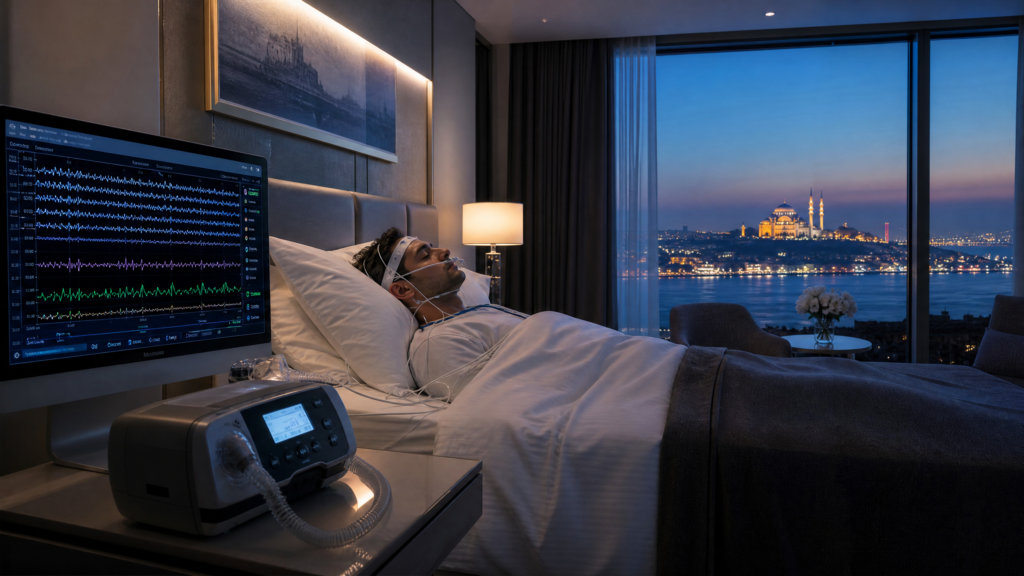
Polysomnography is a comprehensive overnight test that records multiple body functions simultaneously while you sleep, including brain wave activity, eye movements, muscle activity, heart rate, blood oxygen levels, airflow through the nose and mouth, and chest and abdominal movement during breathing. By recording all of these signals together, the test can distinguish between different sleep stages and identify specific abnormalities such as pauses in breathing, drops in blood oxygen, or unusual limb movements that disrupt sleep quality, giving a far more complete picture than a simple description of symptoms alone.
What Conditions Does It Diagnose?
The most common condition identified through polysomnography is obstructive sleep apnea, where the airway repeatedly narrows or collapses during sleep, causing brief pauses in breathing and drops in oxygen levels, often dozens or even hundreds of times per night without the person fully waking up or remembering it in the morning. The test can also help diagnose central sleep apnea, a less common condition related to how the brain signals breathing, periodic limb movement disorder, and certain other sleep disturbances, distinguishing between these different causes of poor sleep quality that might otherwise present with similar daytime symptoms.
Why Sleep Apnea Matters Beyond Feeling Tired
Untreated sleep apnea is linked to more than just daytime fatigue — it’s associated with increased risk of high blood pressure, heart disease, stroke, and type 2 diabetes, and can significantly affect concentration, mood, and safety, particularly around activities like driving. This is why a proper diagnosis matters even for patients who have adapted to feeling tired as their new normal, and why sleep studies are increasingly included in comprehensive preventive health packages, alongside cardiovascular screening covered in our guide to heart health screening in Turkey.
What the Overnight Test Actually Involves
A traditional in-lab polysomnography involves spending a night at the sleep center in a private, hotel-like room, where a technician attaches small sensors to your scalp, face, chest, and legs using adhesive pads and light straps — a process that takes 30 to 60 minutes before you go to sleep. These sensors are connected to a monitoring system that records data throughout the night while you sleep as naturally as possible, and a technician monitors the recordings remotely, occasionally adjusting equipment if needed without waking you unnecessarily. In the morning, the sensors are removed, and you’re free to continue with the rest of your day while the recorded data is analyzed by a sleep medicine specialist.
Home Sleep Apnea Testing as an Alternative
For patients with a high likelihood of straightforward obstructive sleep apnea and no other complicating factors, some centers in Turkey also offer simplified home sleep apnea testing, using a smaller, portable device you wear overnight in your own hotel room rather than staying at the sleep center itself. This option is generally less comprehensive than full in-lab polysomnography — it typically doesn’t record brain waves, for example — but can be a convenient screening option for patients whose travel schedule makes an overnight lab stay more difficult to arrange.
Combining a Sleep Study With Your Trip
Many international patients combine a sleep study with a broader diagnostic or preventive health visit to Turkey, since the overnight nature of the test fits naturally alongside daytime appointments for blood work, imaging, or a specialist consultation on other days of the same trip. This is a practical way to make efficient use of travel time, particularly for patients already planning a comprehensive check-up covered in our guide to health screening packages in Turkey.
What Happens After Diagnosis
If sleep apnea or another sleep disorder is identified, your sleep medicine specialist will discuss appropriate treatment options, which commonly include CPAP therapy — a device that keeps the airway open using gentle air pressure during sleep — lifestyle changes, or in some cases referral for an evaluation of surgical or dental appliance options. Because ongoing management of sleep apnea typically requires follow-up care, it’s worth discussing with your specialist how results and any device settings will be communicated to a sleep specialist back home for continued management after your trip.
Bringing Relevant Information to Your Sleep Consultation
Before your sleep study, it helps to bring a record of your typical sleep patterns, any observations from a partner about snoring or breathing pauses, and a list of factors that might affect the test such as current medications, caffeine or alcohol habits, and your usual bedtime routine. Some sleep centers also ask patients to complete a standardized sleepiness questionnaire beforehand, which helps the specialist interpret your overnight results in the context of how significantly your daily life is actually being affected by poor sleep quality.
Adjusting to CPAP Therapy After Diagnosis
For patients diagnosed with sleep apnea and prescribed CPAP therapy, the adjustment period during the first few weeks of use is genuinely important to a successful long-term outcome, and most sleep centers provide guidance on mask fitting, pressure settings, and troubleshooting common early issues like discomfort or a feeling of claustrophobia. Arranging a follow-up consultation, whether in person before you leave Turkey or remotely afterward, to fine-tune your device settings based on early experience meaningfully improves the chances of sticking with treatment long-term.
Sleep Studies for Patients Who Already Suspect the Diagnosis
Some patients arrive already fairly confident they have sleep apnea based on symptoms and a partner’s observations, and wonder whether formal testing is really necessary. A confirmed diagnosis through polysomnography remains important even in these cases, since it establishes the specific severity of the condition, which directly determines the most appropriate treatment approach and settings, rather than proceeding with treatment based on assumption alone.
Signs That Warrant a Sleep Study
- Loud, chronic snoring
- Witnessed pauses in breathing during sleep
- Persistent daytime fatigue despite adequate time in bed
- Morning headaches or difficulty concentrating
It’s also worth recognizing that sleep quality affects nearly every aspect of daily functioning, from mood and concentration to long-term cardiovascular health, which is why investing the time in a proper overnight diagnostic test, rather than guessing at the cause of poor sleep, tends to be genuinely worthwhile for patients who have been struggling with unexplained fatigue or suspected breathing issues during sleep for an extended period. Addressing the root cause directly, rather than continuing to manage only the daytime symptoms, is ultimately what leads to lasting improvement in quality of life.
How Rexalife Helps
We help arrange sleep studies at accredited sleep centers in Turkey, whether full in-lab polysomnography or home sleep apnea testing, and connect you with a sleep medicine specialist to interpret your results and discuss next steps. We also help coordinate combining this test with other appointments during a broader diagnostic trip. We do not perform testing or diagnose conditions ourselves — that responsibility sits with the sleep medicine specialist reviewing your case.
Frequently Asked Questions
What does a sleep study actually measure?
Polysomnography records brain waves, eye movements, muscle activity, heart rate, blood oxygen levels, and breathing patterns simultaneously overnight to identify disruptions in sleep quality and their underlying causes.
What is the most common condition diagnosed by a sleep study?
Obstructive sleep apnea is the most commonly diagnosed condition, where the airway repeatedly narrows or collapses during sleep, causing pauses in breathing and drops in oxygen levels.
Do I need to stay overnight at the sleep center?
Traditional in-lab polysomnography requires an overnight stay, though some centers offer home sleep apnea testing with a portable device for patients whose travel schedule makes a lab stay difficult.
Why is diagnosing sleep apnea important beyond feeling tired?
Untreated sleep apnea is linked to increased risk of high blood pressure, heart disease, stroke, and type 2 diabetes, making proper diagnosis and treatment important for long-term health, not just daytime energy.
Can I combine a sleep study with other health check-ups during my trip?
Yes, many patients combine an overnight sleep study with daytime appointments for blood work, imaging, or specialist consultations during the same trip to Turkey.
How soon will I get my sleep study results?
Results typically take a few days to a week to be fully analyzed and reviewed by a sleep medicine specialist, who will then discuss findings and any recommended treatment with you.
Can children have a sleep study in Turkey?
Yes, pediatric sleep studies are available at centers with dedicated pediatric sleep medicine experience, though the setup and interpretation differ somewhat from adult studies.
About the author
admin — RexaLife medical content team. All health content is reviewed by qualified professionals.
Have questions about this topic?
Speak with a dedicated coordinator. No obligation — your information stays private.
RexaLife is a medical tourism facilitator and healthcare concierge service. RexaLife is not a hospital, clinic, or medical provider and does not provide medical care, diagnosis, or advice. All treatments are delivered by independent, accredited partner providers. Information on this page is general and does not replace professional medical consultation. Costs are estimates and depend on the chosen provider.