Medical Tourism Guide
How a Medical Tourism Consultancy Coordinates Your Trip: The Concierge Process Explained
Reviewed by admin · Last updated July 14, 2026
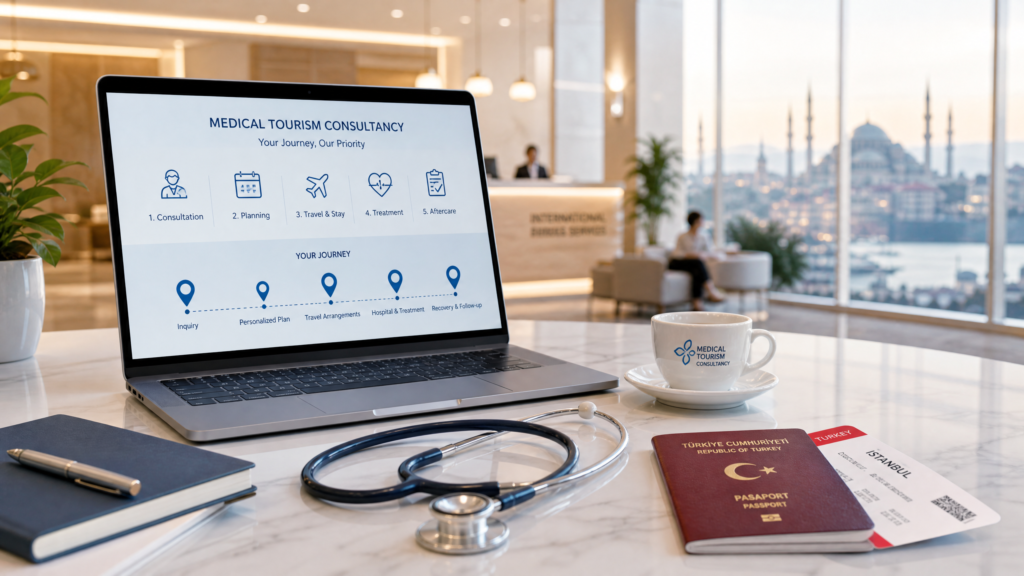
Patients researching treatment abroad often reach a point where they wonder whether it’s simpler to just contact a hospital in Turkey directly, rather than going through a consultancy. It’s a fair question, and understanding exactly what a medical tourism consultancy does — and doesn’t do — helps you decide whether that coordination adds real value for your specific situation. This article explains the concierge process step by step, using Rexalife’s own approach as an example of how this typically works.
To be clear from the outset: Rexalife is a consultancy, not a hospital, clinic, or medical provider. We do not perform any treatment ourselves. Our role is entirely about matching, verifying, coordinating, and supporting — every clinical decision remains between you and your chosen doctor.
Step One: Understanding Your Needs
The process typically begins with a detailed conversation, usually conducted remotely by video call or messaging, to understand what treatment you’re considering, your medical history, budget, timeline, and any specific concerns or preferences — such as wanting a female surgeon, needing a particular language spoken fluently, or having a preferred city in mind. This initial conversation shapes everything that follows, since matching you with the right hospital and surgeon depends on understanding your actual situation, not just the name of the procedure you’re researching.
Step Two: Matching You With the Right Doctor and Hospital
Based on that initial conversation, a consultancy narrows down options from a wider network of hospitals and surgeons to a handful of genuinely suitable matches, rather than presenting every available option indiscriminately. This step involves considering the surgeon’s specific experience with your exact procedure, their accreditation and standing, the hospital’s facilities and international patient support, and practical factors like location and language capability. Our guide to how to choose the right doctor in Turkey outlines the criteria this matching process is built around.
Step Three: Obtaining and Comparing Quotes
Once potential matches are identified, a consultancy typically requests detailed, itemized quotes from each option, then presents these to you in a clear, comparable format — since hospital quotes are not always structured the same way, making direct comparison difficult without this translation step. This is also where a consultancy can flag quotes that look unusually low, cross-referencing them against our broader Medical Tourism Turkey Cost Guide 2026 to help you understand whether a price reflects genuine value or a corner being cut somewhere in the package.
Step Four: Verifying Credentials
Before finalizing your choice, a thorough consultancy independently verifies the surgeon’s medical license, board certifications, and hospital accreditation, rather than simply relying on marketing materials provided by the clinic itself. This verification step is one of the most concretely valuable parts of working with a consultancy, since it requires knowledge of Turkey’s specific medical licensing bodies and accreditation systems that most international patients wouldn’t know how to check independently — a process detailed further in our guide to how to verify a doctor’s credentials in Turkey.
Step Five: Coordinating Travel Logistics
Once your treatment plan and clinic are confirmed, coordination shifts to the practical side of the trip: recommending appropriate accommodation near your treatment location, arranging airport transfers, and helping structure your itinerary around appointment dates and required recovery time. For patients travelling with family, as discussed in our guide to family dental tourism, this logistics coordination becomes even more valuable given the additional moving parts involved.
Step Six: Being Available During Your Treatment
During your actual time in Turkey, a good consultancy remains a point of contact for any non-clinical questions or concerns that arise — helping resolve a scheduling mix-up, clarifying a billing question, or simply being someone to reach out to if you feel uncertain about any part of the process while away from home. This ongoing availability during the trip itself is often what distinguishes a genuine concierge service from a one-time booking referral.
Step Seven: Supporting Recovery and Follow-Up
The relationship doesn’t end when you leave the hospital. A thorough consultancy helps arrange remote follow-up consultations with your surgical team after you return home, assists if any post-operative questions or concerns arise, and can help coordinate additional care if needed. This ongoing support through recovery — not just the initial booking — is central to what distinguishes coordinated medical tourism from simply booking a flight and a clinic appointment independently.
What a Consultancy Does Not Do
It’s worth being explicit about the boundaries: a consultancy does not perform medical examinations, diagnose conditions, recommend specific treatments, or provide clinical advice — all of these remain the responsibility of licensed physicians. A consultancy also does not guarantee surgical outcomes, since even the best surgeon and hospital cannot eliminate the inherent risks present in any medical procedure. Understanding this distinction helps set appropriate expectations for what coordination support can and cannot provide.
Questions to Ask a Consultancy Before Working With Them
Before choosing a consultancy to work with, it’s reasonable to ask how they earn their revenue and whether this creates any bias toward recommending particular hospitals, how they verify medical credentials specifically, and what level of support is genuinely available during your actual trip versus only during the initial booking process. A transparent consultancy should be able to answer these questions clearly and specifically, rather than deflecting with vague reassurances about being “the best in the industry.”
Recognizing the Signs of a Trustworthy Consultancy
A trustworthy consultancy is generally comfortable being transparent about how it operates, is willing to present more than one hospital or surgeon option rather than pushing you toward a single choice, and doesn’t pressure you into rushed decisions with artificial urgency. Taking time to have an initial conversation with a prospective consultancy, asking direct questions, and gauging how thoroughly and honestly they answer is a reasonable, low-cost way to assess fit before committing to work with them on something as important as your health.
The Value of a Single Point of Contact
One underrated benefit of working with a consultancy is having a single, consistent point of contact throughout a process that otherwise involves multiple different parties — the hospital’s international patient department, the surgeon’s own team, your hotel, and transport providers. Rather than juggling separate communications with each of these, a consultancy consolidates this coordination, which many patients find considerably reduces the mental load of planning a medical trip abroad.
What a Good Consultancy Should Offer
- Multiple verified hospital and surgeon options, not just one
- Independent credential verification
- Transparent, comparable quotes
- Ongoing support through recovery and follow-up
As medical tourism continues to grow globally, the role of a genuine, transparent consultancy becomes increasingly valuable precisely because the number of options and marketing claims patients encounter online has grown just as quickly. Having a knowledgeable, independent party to help filter through this noise and focus specifically on verified, suitable options for your situation is often what makes the difference between a stressful search and a confident, well-supported decision. This combination of independent verification and hands-on logistics support is precisely what a well-run consultancy adds to your medical journey.
How Rexalife Approaches This Process
We follow this same structure with every patient — understanding your needs, matching you with genuinely suitable, verified options, helping you compare transparent quotes, coordinating your travel logistics, remaining available during your trip, and supporting your recovery and follow-up after you return home. Throughout, we are clear about the boundary between our coordination role and the clinical decisions that remain between you and your medical team.
Frequently Asked Questions
What does a medical tourism consultancy actually do?
A consultancy matches you with suitable, verified hospitals and surgeons based on your needs, helps you compare transparent quotes, verifies medical credentials, coordinates travel logistics, and supports your recovery and follow-up.
Does a consultancy perform medical treatment?
No, a consultancy is not a hospital or clinic and does not perform treatment, diagnose conditions, or provide clinical advice. All clinical decisions remain between you and your chosen medical team.
Is it cheaper to book directly with a hospital instead of using a consultancy?
Not necessarily. Consultancies typically don’t add a markup to hospital pricing, and their value lies in verification, comparison, and coordination rather than adding cost to your treatment.
How does a consultancy verify a surgeon’s credentials?
A thorough consultancy independently checks medical licensing bodies and accreditation systems in Turkey, rather than relying solely on marketing materials provided by the clinic itself.
Does support end once I leave the hospital?
With a genuine concierge-style consultancy, no. Support typically continues through arranging remote follow-up consultations and assisting with any post-operative questions after you return home.
Does using a consultancy cost more than booking directly with a hospital?
Typically not; most consultancies are compensated through arrangements with their hospital network rather than charging patients directly, so their coordination services usually come at no extra cost to you.
Can I still use a consultancy if I’ve already chosen a hospital myself?
Yes, many consultancies can still assist with credential verification, quote review, travel logistics, and follow-up support even if you’ve already identified a hospital independently.
About the author
admin — RexaLife medical content team. All health content is reviewed by qualified professionals.
Have questions about this topic?
Speak with a dedicated coordinator. No obligation — your information stays private.
RexaLife is a medical tourism facilitator and healthcare concierge service. RexaLife is not a hospital, clinic, or medical provider and does not provide medical care, diagnosis, or advice. All treatments are delivered by independent, accredited partner providers. Information on this page is general and does not replace professional medical consultation. Costs are estimates and depend on the chosen provider.