
Medical Tourism Guide
Payment Methods and Financing for Medical Treatment in Turkey
Reviewed by admin · Last updated July 14, 2026
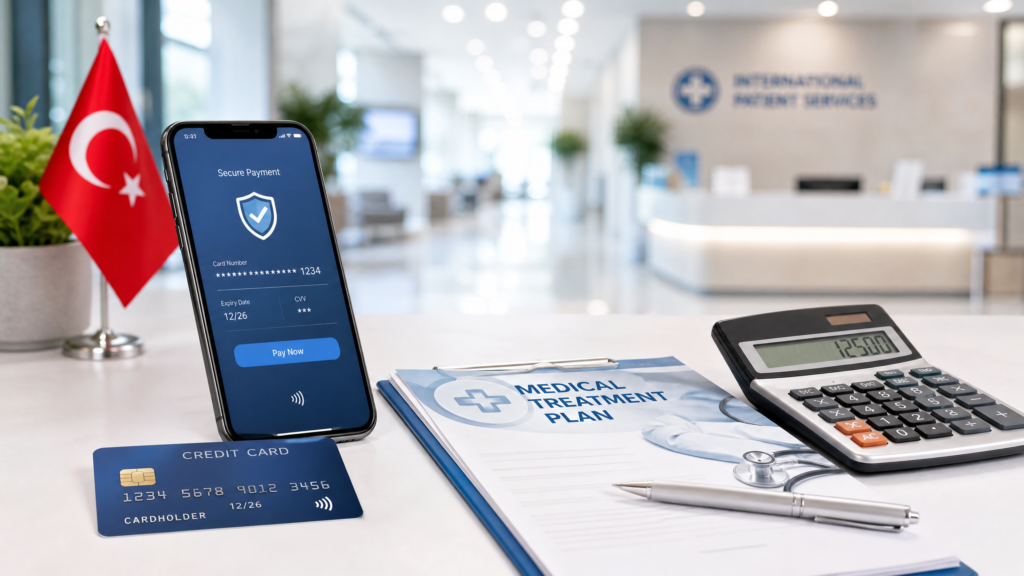
Once you’ve chosen a clinic, verified your surgeon, and agreed on a treatment plan, one practical question remains before you travel: exactly how do you pay for medical treatment in Turkey, and what options exist if you need to spread the cost? This guide walks through the typical payment structures international patients encounter, accepted payment methods, currency considerations, and financing options worth understanding before you commit to a deposit.
Rexalife is a medical consultancy. We help patients understand and compare payment terms across different clinics as part of obtaining transparent, itemized quotes — we are not a payment processor, bank, or lender ourselves.
Typical Deposit and Payment Structure
Most hospitals and clinics in Turkey require a deposit to confirm your booking, commonly ranging from 10% to 30% of the total treatment cost, with the remaining balance due either before or on the day of your procedure, depending on the clinic’s specific policy. Some clinics request full payment prior to treatment, particularly for shorter procedures like hair transplants or dental work completed in a single visit, while others allow the balance to be settled after arrival but before the procedure itself begins. Always confirm this structure clearly in writing before paying any deposit, and cross-reference it with the general guidance in our questions to ask before choosing a clinic.
Accepted Payment Methods
International bank transfer remains the most common method for larger payments, such as a deposit for surgery, since it provides a clear paper trail and is widely accepted by hospital finance departments. Credit and debit card payments are also commonly accepted, particularly for smaller amounts or balance payments made in person at the clinic, though card payments may incur a processing fee of a few percentage points that isn’t always charged on bank transfers. Some clinics increasingly accept payment through international payment platforms designed specifically for cross-border healthcare payments, which can sometimes offer more favorable exchange rates than a standard bank transfer.
Currency Considerations
Most clinics catering to international patients quote prices in US dollars, euros, or British pounds rather than Turkish lira, which helps patients budget without worrying about currency fluctuation between the time of quote and the time of payment — though it’s worth confirming this explicitly, since a quote in lira could change in foreign currency terms if there is significant exchange rate movement before your payment date. If paying by bank transfer, ask whether the clinic’s bank account holds the currency you’re paying in directly, since transfers that require currency conversion partway through sometimes incur additional bank fees on either end that aren’t always disclosed upfront.
Understanding What’s Included Before You Pay
Before transferring any deposit, make sure you have a fully itemized quote showing exactly what is and isn’t included — surgeon’s fee, hospital stay, anesthesia, pre-operative tests, airport transfers, and accommodation if bundled — since prices that look attractively low sometimes exclude items that are added later as separate charges. Our detailed Medical Tourism Turkey Cost Guide 2026 and our article on the hidden costs of medical treatment abroad both cover this in more detail and are worth reviewing before you commit to any payment.
Financing and Installment Options
Some patients choose to finance their treatment through a personal loan, a medical financing company operating in their home country, or a low-interest credit card arrangement, paying the clinic in full upfront while spreading their own repayment over time through their chosen lender. A small number of clinics in Turkey also offer limited in-house installment arrangements directly, though these vary significantly by clinic and procedure, and terms should be reviewed carefully, including any interest charged and the consequences of a missed or late payment, before agreeing to any financing arrangement.
Insurance and Payment Interaction
If you have travel insurance or mandatory complication insurance covering your treatment in Turkey, it’s worth understanding how this interacts with your direct payment to the clinic — most complication coverage operates as a separate safety net for unexpected additional costs rather than covering your planned treatment payment itself. Our guide to mandatory complication insurance in Turkey explains how this type of coverage typically works alongside your direct payment to the hospital or clinic.
Protecting Yourself Before Paying a Deposit
Before sending any payment, confirm the clinic’s bank account details directly through an official, verified communication channel rather than relying solely on an email that could potentially be intercepted or spoofed — a known risk in cross-border payments generally, not specific to medical tourism. Request a receipt or confirmation immediately after any payment, and keep all payment records, itemized quotes, and written correspondence in one place throughout your treatment journey, since this documentation is valuable if any dispute arises later.
Refund Policies
Ask directly about the clinic’s refund policy before paying a deposit — specifically what happens if you need to cancel or postpone your trip, whether for personal reasons or a change in your surgeon’s medical assessment during your pre-operative evaluation. Refund policies vary considerably between clinics, and having this in writing before you pay avoids uncomfortable surprises if your plans need to change.
Keeping Records for Tax and Insurance Purposes
Depending on your home country, medical expenses paid abroad may be relevant for tax deductions or reimbursement claims through private insurance, even when the insurance didn’t cover the procedure directly. Keeping detailed receipts, itemized invoices, and proof of payment throughout your treatment journey in Turkey is worth doing regardless of whether you plan to make a claim immediately, since these records can be difficult to reconstruct after the fact if you decide later that you need them for a tax filing or an insurance-related request.
Comparing Total Cost, Not Just the Headline Price
When comparing financing options or payment plans across different clinics, it’s worth calculating the total amount you’ll actually pay over time, including any interest or fees, rather than comparing only the headline treatment price. A slightly higher upfront quote with no financing costs can sometimes work out considerably cheaper overall than a lower headline price combined with an expensive installment plan, so running these numbers side by side before committing is a worthwhile exercise.
Currency Hedging for Larger Procedures
For patients booking well in advance of a costly procedure, some choose to lock in a favorable exchange rate early using a forward currency contract through their bank, protecting against unfavorable currency movement between booking and payment. This is a more advanced financial step generally worth considering only for larger treatment costs, and is best discussed with your own bank or financial advisor rather than the clinic itself.
Before You Send a Deposit: Quick Checklist
- Get a fully itemized, written quote
- Verify bank details through an official channel
- Confirm the refund and cancellation policy in writing
- Keep all receipts and correspondence in one place
Ultimately, the right payment approach depends on your personal financial situation and comfort level with different arrangements, and there’s no single correct answer that fits every patient. Taking the time to understand all the options available, asking direct questions of your chosen clinic, and comparing total costs rather than just headline prices puts you in the strongest position to make a confident, well-informed decision.
How Rexalife Helps
We help patients obtain clear, itemized quotes with transparent payment terms from multiple clinics in Turkey, verify official payment details before any deposit is sent, and flag any unusual or concerning payment requests we encounter during the process. We are not a payment processor or lender — our role is helping you make an informed, well-documented payment decision as part of your overall treatment planning.
Frequently Asked Questions
How much deposit do I need to pay for treatment in Turkey?
Deposits typically range from 10% to 30% of the total treatment cost, with the remaining balance usually due before or on the day of your procedure, depending on the specific clinic’s policy.
What payment methods are accepted by clinics in Turkey?
International bank transfer is the most common method for larger payments, with credit and debit cards also widely accepted, sometimes with a processing fee for card payments.
Should I pay in Turkish lira or a foreign currency?
Most international clinics quote and accept payment in US dollars, euros, or British pounds, which helps avoid currency fluctuation concerns, though it’s worth confirming this explicitly with your clinic.
Can I finance my medical treatment in Turkey?
Some patients use a personal loan or medical financing company in their home country, while a small number of clinics offer limited in-house installment arrangements directly, with terms varying significantly by clinic.
How do I verify a clinic’s bank details before paying a deposit?
Confirm bank account details through an official, verified communication channel rather than relying solely on email, since payment fraud is a known cross-border risk unrelated specifically to medical tourism.
Is it safe to pay a large deposit by international bank transfer?
Bank transfer is generally considered secure and provides a clear paper trail, provided you’ve independently verified the recipient’s bank details through an official channel before sending payment.
Can I pay for my treatment in installments directly with the clinic?
Some clinics offer limited in-house installment options, though this varies significantly, so it’s worth asking directly and reviewing any terms carefully before agreeing.
About the author
admin — RexaLife medical content team. All health content is reviewed by qualified professionals.
Have questions about this topic?
Speak with a dedicated coordinator. No obligation — your information stays private.
RexaLife is a medical tourism facilitator and healthcare concierge service. RexaLife is not a hospital, clinic, or medical provider and does not provide medical care, diagnosis, or advice. All treatments are delivered by independent, accredited partner providers. Information on this page is general and does not replace professional medical consultation. Costs are estimates and depend on the chosen provider.