Hair Transplant
Hair Transplant Consultation Checklist for International Patients
Reviewed by admin · Last updated June 17, 2026
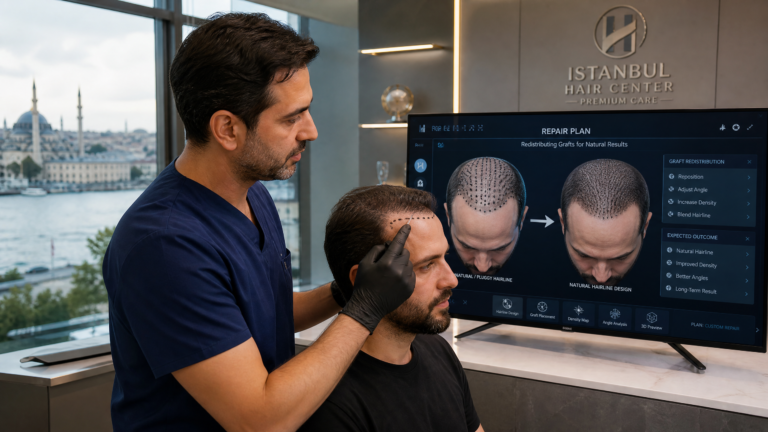
The consultation is where a good hair transplant begins — it is your opportunity to assess the clinic, verify the surgeon, and plan properly. This hair transplant consultation checklist for international patients sets out exactly what to ask and look for before committing. Using it turns the consultation into a powerful tool for choosing well and avoiding poor operators. It complements the choosing guidance in how to choose a hair transplant clinic.
Why the Consultation Matters
A proper consultation does several essential things: it assesses your suitability, plans your procedure, sets realistic expectations, and lets you verify the surgeon and clinic. A clinic willing to proceed without a proper consultation is a warning sign, as in how to spot a hair mill in Turkey. Treat the consultation as your key checkpoint before committing — and come prepared with this checklist.
Questions About the Surgeon
- What are your qualifications and experience in hair transplants specifically?
- Who exactly will perform my procedure?
- How involved will the surgeon be, versus technicians?
The surgeon and their genuine involvement are central to your result — verify them, as in how to verify a doctor’s credentials in Turkey.
Questions About the Plan
- What is your assessment of my hair loss and donor area?
- How many grafts do you recommend, and why?
- How will you design my hairline?
The plan should be individual and explained clearly, drawing on how many grafts you need and hairline design before a hair transplant.
Questions About Results
- What result is realistic for me, given my situation?
- What is the expected timeline for seeing results?
- Can you show me examples of your work on similar cases?
A good surgeon sets realistic expectations, as in hair transplant Turkey before and after: what results are realistic. Be wary of promises of perfection.
Questions About the Technique
- What technique do you recommend for me, and why?
- What does the procedure involve on the day?
Understanding the technique — such as FUE or DHI, compared in FUE vs DHI hair transplant — helps you understand your procedure.
Questions About Cost
- What is the total cost, itemized?
- What is included, and what costs extra?
- How is the price structured (per graft or package)?
Clear, itemized pricing protects you, as in FUE hair transplant Turkey cost by graft count and medical tourism packages in Turkey: what’s included and what’s not.
Questions About Aftercare
- What aftercare is included?
- How will follow-up work once I return home?
- What happens if I have concerns or complications later?
Aftercare from abroad is a key consideration, as in what clinics don’t tell you about hair transplant recovery.
Remote and In-Person Consultations
Many clinics offer initial remote consultations for international patients, which are useful for early questions and assessment from photos. However, a thorough assessment before the procedure is also important. Confirm how the clinic handles assessment, and use a remote consultation to apply this checklist before you travel. This is part of planning a smooth trip, as in what to expect during a medical trip to Turkey.
Watch How They Respond
Beyond the answers, notice how the clinic responds. Openness, patience, and willingness to answer fully are good signs; vagueness, pressure, or reluctance are warning signs, as in red flags when choosing a clinic in Turkey. How a clinic handles your questions reveals a great deal about how it will handle your care.
How Rexalife Helps
As a consultancy, we connect you with reputable clinics that offer proper consultations, help you prepare and ask the right questions, and support you through the process. We do not perform procedures ourselves and do not provide medical advice — qualified surgeons assess your suitability and perform any procedure. For the wider journey, read our complete guide to medical tourism in Turkey.
Preparing for Your Consultation
To get the most from your consultation, prepare for it in advance rather than approaching it passively. Write down your questions using this checklist, gather any relevant information about your hair loss history, and think about what matters most to you in terms of results and budget. Having clear photographs ready can help, particularly for an initial remote consultation. Going in prepared allows you to cover everything that matters, compare clinics on a consistent basis, and avoid forgetting important questions in the moment. It also signals to the clinic that you are a thoughtful, informed patient, which tends to encourage a more thorough and serious response. The consultation is your single best opportunity to assess a clinic before committing, so treating it with preparation and care is well worth the effort. A little planning beforehand turns the consultation into a genuinely powerful tool for making the right choice with confidence.
Conclusion
The consultation is your key checkpoint before a hair transplant, and this checklist helps you make the most of it: ask about the surgeon and their involvement, the plan and graft count, realistic results, the technique, itemized costs, and aftercare. Notice how the clinic responds, and treat vagueness or pressure as warning signs. Use the consultation to verify and plan properly, and you give yourself the best chance of a safe, satisfying result.
Frequently Asked Questions
What should I ask in a hair transplant consultation?
Ask about the surgeon’s qualifications and experience, who will perform the procedure, the proposed plan and graft count, realistic expected results, the technique, costs and inclusions, and aftercare and follow-up.
Why is a consultation important before a hair transplant?
A proper consultation assesses your suitability, plans your procedure, sets realistic expectations, and lets you verify the surgeon and clinic; proceeding without one is a warning sign of a poor-quality operation.
Can I have a hair transplant consultation remotely?
Many clinics offer initial remote consultations for international patients, which can be useful, though a thorough in-person assessment before the procedure is also important; confirm how assessment will be handled.
What are warning signs in a hair transplant consultation?
Warning signs include vagueness about the surgeon, no proper assessment, unrealistic promises, pressure to book, and reluctance to answer questions about results, risks, or aftercare.
About the author
admin — RexaLife medical content team. All health content is reviewed by qualified professionals.
Have questions about this topic?
Speak with a dedicated coordinator. No obligation — your information stays private.
RexaLife is a medical tourism facilitator and healthcare concierge service. RexaLife is not a hospital, clinic, or medical provider and does not provide medical care, diagnosis, or advice. All treatments are delivered by independent, accredited partner providers. Information on this page is general and does not replace professional medical consultation. Costs are estimates and depend on the chosen provider.