Medical Tourism Guide
What Documents to Bring for Surgery in Turkey
Reviewed by admin · Last updated June 20, 2026
Arriving for treatment with the right paperwork makes everything smoother, and knowing the documents to bring for surgery in Turkey means you avoid delays at the border or clinic and help your treating team care for you safely. A simple checklist, prepared before you fly, covers your travel documents, insurance, medical records and clinic correspondence, so nothing holds up your treatment once you arrive.
Travel and entry documents
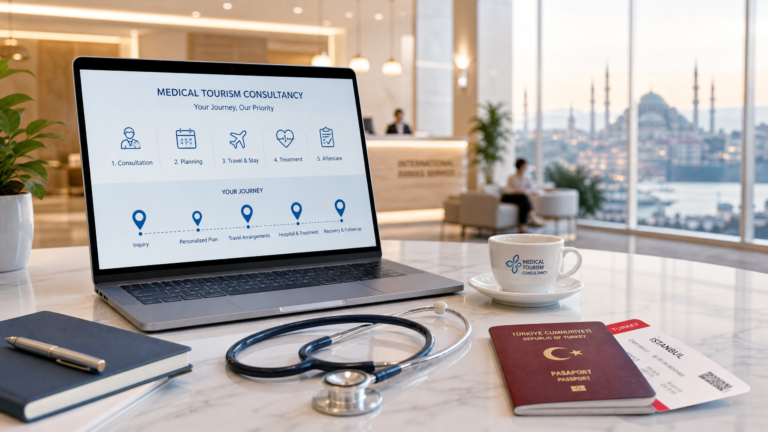
Start with the essentials for entering the country. Bring your valid passport, ensuring it has sufficient remaining validity, commonly at least six months, along with any e-visa or visa confirmation and, if you have one, your clinic invitation letter for a medical visa. It also helps to carry your return flight confirmation and proof of accommodation, which can be requested at entry. Having these organised, as our guide to visa requirements describes, ensures the entry process is quick and stress-free at the start of your trip.
Insurance documents
Insurance paperwork is increasingly important. Bring your travel insurance documents and, since this is now a requirement, confirmation relating to the mandatory complication insurance for surgical patients in Turkey, which our guide to complication insurance explains. Having proof of your cover to hand means any questions about insurance can be answered immediately. Keeping these documents with your travel papers, rather than buried in luggage, makes them easy to produce when needed, whether at the clinic or in the unlikely event of an emergency elsewhere.
Medical records
Your medical records help the Turkish team treat you safely and effectively. Bring relevant records such as recent blood tests, imaging like X-rays, CT or MRI scans, your surgical and medical history, an allergy list and your current medications, ideally accompanied by a summary from your home doctor. If any documents are not in English, arranging a translation in advance is wise. Sending these to the clinic before you fly, as our guide to medical records covers, lets them plan, and carrying copies ensures they are available in person too.
Medications
Bring your current medications in their original packaging, ideally with the prescriptions, so they are clearly identified both at the border and by your treating team. This avoids any confusion about what you are taking and supports safe care, particularly as some medications interact with surgery or anaesthesia. A clear, written list of your medications and doses, in addition to the packaged medicines themselves, is a simple safeguard that helps the clinical team account for everything when planning your treatment and aftercare.
Clinic correspondence and the practical kit
Finally, carry copies of your correspondence with the clinic, your itemised quote and treatment plan, and any invitation letter, since these confirm your arrangements and are useful both at entry and at the clinic. It is also worth having a phone with international roaming or a local SIM, some cash in local currency for minor expenses, and comfortable clothing suited to recovery. Pulling all of this together into one organised folder before departure, in line with our travel checklist, means you arrive fully prepared.
How Rexalife helps
Rexalife is a medical tourism consultancy that guides patients to verified doctors and clinics in Turkey; we do not perform treatment or provide legal advice. We help you understand what documents to prepare and connect you with clinics that tell you exactly what they need in advance, so your paperwork is complete before you travel. The specific requirements for your treatment are confirmed by your clinic and official entry rules.
Organising everything in one place
A simple habit that makes a real difference is gathering all your documents into one organised folder, physical or digital, before you leave home. When your passport, visa confirmation, insurance papers, medical records, medication list and clinic correspondence are together in a single place, you can produce whatever is needed at immigration, at the clinic or in any unexpected situation without rummaging through luggage. It is also wise to keep digital copies, such as photographs or scans stored securely on your phone or in the cloud, as a backup in case any physical document is lost. Carrying the most essential items, your passport, key medical information and medications, in your hand luggage rather than checked baggage ensures they are always with you. Going through your folder one final time before departure, checking against a list, catches anything missing while there is still time to address it. This small piece of organisation removes a surprising amount of potential stress from the journey, since document problems are among the most avoidable yet disruptive issues in medical travel. Arriving with everything in order, easy to find and backed up, lets you move through each stage of the trip smoothly and turn your full attention to your treatment and recovery rather than worrying about paperwork.
Related reading: see how to prepare your body before surgery and what to expect at the airport.
Conclusion
Bringing the right documents for surgery in Turkey, your passport and visa, insurance papers, medical records and medications, and clinic correspondence, ensures a smooth entry, safe treatment and easy communication. Prepare a single organised folder before you fly, send records to the clinic in advance, and carry medications in their original packaging. This simple preparation removes a common source of stress and lets you focus on your treatment and recovery rather than scrambling for paperwork on arrival.
Frequently Asked Questions
What documents do I need for surgery in Turkey?
Bring your valid passport, any visa or e-visa confirmation, travel and complication insurance documents, your medical records and medication list, clinic correspondence and quote, and any invitation letter. Having these ready ensures a smooth check-in and safe treatment.
What medical records should I bring?
Bring relevant records such as recent blood tests, imaging like X-rays or scans, your surgical and medical history, allergy list and current medications, ideally with a summary from your home doctor. These help the Turkish team plan and treat safely.
Do I need my medications in original packaging?
Yes, carry current medications in their original packaging, ideally with prescriptions, so they are clearly identified at the border and by your treating team. This avoids confusion and supports safe care during your stay.
Should I bring copies of clinic correspondence?
Yes, carry copies of your correspondence with the clinic, your itemised quote and treatment plan, and any invitation letter. These confirm your arrangements and are useful at entry and at the clinic.
About the author
admin — RexaLife medical content team. All health content is reviewed by qualified professionals.
Have questions about this topic?
Speak with a dedicated coordinator. No obligation — your information stays private.
RexaLife is a medical tourism facilitator and healthcare concierge service. RexaLife is not a hospital, clinic, or medical provider and does not provide medical care, diagnosis, or advice. All treatments are delivered by independent, accredited partner providers. Information on this page is general and does not replace professional medical consultation. Costs are estimates and depend on the chosen provider.